Manhattan’s elite universities are often described as “cities within a city.” Institutions like NYU, Columbia, and Fordham operate massive, multi-block footprints that encompass historic lecture halls, cutting-edge research laboratories, high-density residential dormitories, and specialized medical facilities.
For the facilities teams managing these campuses, water is not just a utility—it is a mission-critical resource with a level of complexity that far exceeds a standard residential or commercial building. Managing a university water system requires balancing the hygiene requirements of a hospital, the precision of a laboratory, and the safety of a thousands-strong residential community.
The Challenge of Mixed-Use Interconnectivity
A typical Manhattan university campus features an interconnected network of systems that must perform different functions simultaneously:
- Research Laboratories: Science facilities often require ultrapure water (deionized or reverse osmosis) for experiments. They also produce complex waste streams that require specialized neutralization before entering the municipal system.
- High-Density Housing: Dormitories operate like massive apartment complexes but with even more extreme “surge” usage patterns during mornings and evenings.
- Dining Services: Large-scale commercial kitchens and cafeterias introduce significant organic loading and grease management challenges.
- Mechanical Infrastructure: Centralized steam plants and chilled water loops serve multiple buildings, requiring precision chemical balancing to prevent scaling and corrosion across miles of underground piping.
Managing the “Semester Swing” and Stagnation
Perhaps the greatest water issue for university managers is the extreme variability in occupancy. During winter break, spring break, and the summer months, massive sections of the campus may sit empty.
When water stops moving in a 20-story dormitory or a specialized academic wing, the chlorine residual dissipates and the water temperature begins to equalize with the building’s ambient air. This creates a high risk for biofilm development and the growth of Legionella. Unlike a traditional landlord who might flush a single vacant apartment, university teams must implement campus-wide flushing protocols and secondary disinfection monitoring to ensure that the water is safe for the “First Day of School” surge.
Specialized Testing for Research Integrity
In a university setting, testing services go beyond basic potability. For a world-class research institution, trace contaminants in the water can ruin years of scientific study.
- Metals and Minerals: Researchers in chemistry or biology departments require water with virtually zero mineral interference.
- Microbiological Purity: Hospitals and medical research wings attached to universities (such as those in the Upper East Side medical corridor) require rigorous monitoring for opportunistic pathogens that could impact immunocompromised patients or sensitive cultures.
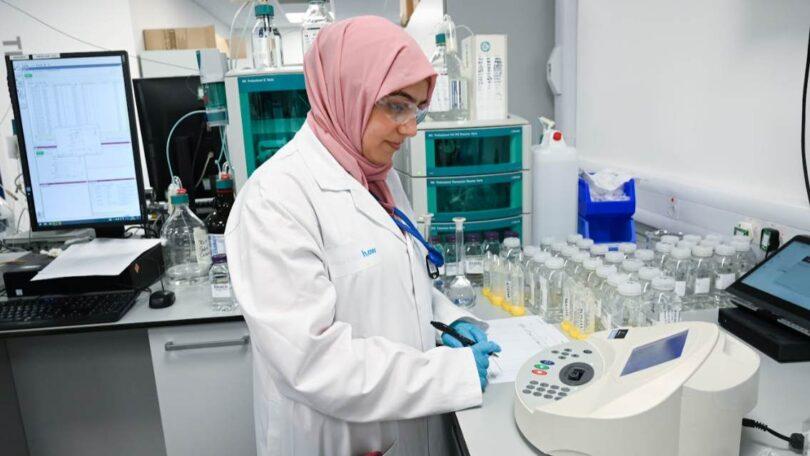
Professional Manhattan water testing provides the high-sensitivity analysis needed to validate that these specialized purification systems are functioning at 100% capacity.
Regulatory Pressure and the “Green” Campus
Universities are often the face of sustainability in New York City. Many Manhattan institutions have joined the NYC Water Challenge, committing to significant reductions in campus-wide water consumption.
However, “green” initiatives—such as low-flow fixtures and greywater recycling—can inadvertently increase water age and stagnation risks. Certified water analysis is the essential “check and balance” for these sustainability programs. It provides the data to prove that water conservation efforts are not compromising the biological safety of the campus.
Establishing a Defensible Standard of Care
Given the high population density and the presence of both minors and researchers, universities face unique liability risks. A single waterborne outbreak or a contamination event in a lab can lead to massive reputational and financial damage.
Utilizing a certified lab provides the university with a defensible record of safety. These institutions often utilize a professional FAQ to stay ahead of shifting NYC regulations, but the foundation of their risk management strategy is a consistent, documented testing cycle. This data allows administrators to prove that they are exercising a “premium standard of care” for their students, faculty, and staff.
Conclusion
The plumbing of a Manhattan university is a living, breathing, and highly variable infrastructure. By recognizing the hidden complexities of their systems—from the “semester swing” to the demands of research—university managers can move from reactive maintenance to proactive intelligence.
If you are overseeing a campus and want to ensure your water quality oversight matches the sophistication of your facilities, contact our team of specialists today for a comprehensive system audit. For more insights into the science of institutional water management, visit our blog for the latest updates.