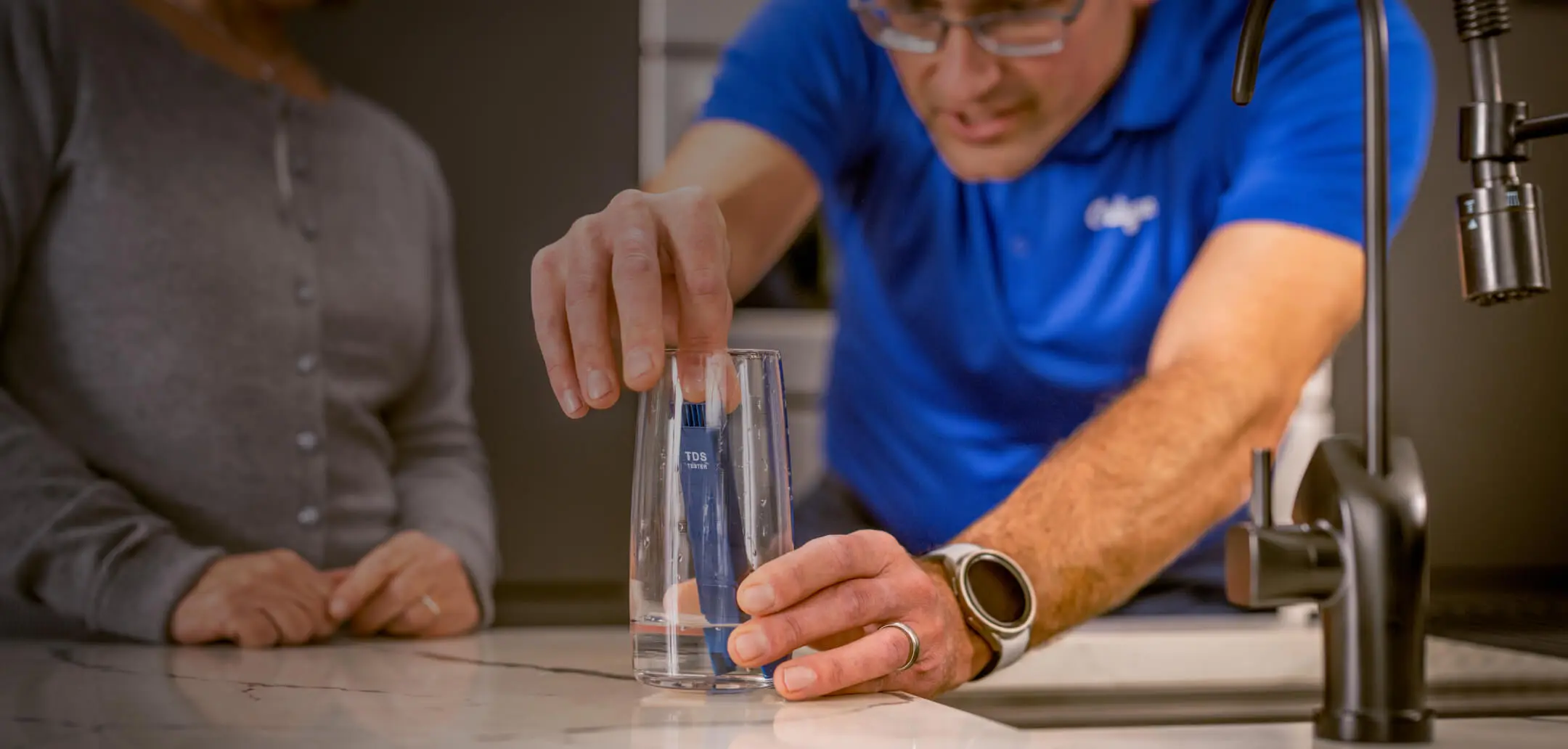
When you turn on the tap in your Manhattan apartment or office, you expect the water to be clean, clear, and safe. For most, this is a passive expectation—we trust the municipal infrastructure, we trust the treatment plants, and we go about our day. However, when doubts arise—perhaps due to a metallic taste, a slight discoloration, or simply the realization that your building’s plumbing is over a century old—the immediate reaction is often to look for answers. Many people turn to hardware store testing kits, expecting a quick solution. While these kits provide a snapshot, they often fail to capture the reality of your situation. This is where certified water laboratories elevate the process, offering far more than a simple data report.
The Limitations of the DIY Approach
It is understandable why a quick, over-the-counter water test is appealing. It is cheap, immediate, and requires no outside expertise. However, in the world of environmental science, “immediate” often sacrifices accuracy. DIY kits typically test for a very narrow range of contaminants and often use qualitative methods—color changes that are subjective and prone to error.
When you work with a certified laboratory, you are not just buying a test; you are entering into a rigorous scientific process. These labs operate under strict regulatory standards, ensuring that every sample is handled according to established protocols. This “chain of custody” is vital. Whether you are a property manager concerned about water issues or a homeowner wanting to verify the safety of their kitchen tap, a certified lab provides results that hold legal, real-world weight. They don’t just tell you that there is “some” lead; they tell you exactly how many parts per billion are present, allowing you to compare that number against established health safety standards.
Beyond the Numbers: The Consultative Advantage
The most significant value of a certified laboratory lies in the context they provide. A strip of colored paper from a home kit doesn’t tell you why your water has high levels of copper or why your iron levels seem to spike on Monday mornings. A professional lab report, however, is part of a larger conversation.
When you engage with professional testing services, you are often working with experts who understand the unique anatomy of New York City plumbing. They know that Manhattan is a landscape of diverse and aging infrastructure. They understand that a “high lead” result might not mean the city’s water is tainted, but rather that your building’s service line is made of lead, or that a “dead leg”—a dormant section of pipe—is leaching metals into your water when it sits unused.
This consultative approach is the bridge between data and action. If a test comes back with concerning levels of a specific contaminant, a certified laboratory can explain the source of the problem. Are the pipes galvanized? Is the water chemistry acidic? Is the issue isolated to your unit, or is it a building-wide problem? This level of insight transforms a scary number into a solvable problem. It gives you the “why,” which is just as important as the “what.”
The Complexity of Manhattan Infrastructure
New York City’s building stock is arguably the most complex in the nation. We have pre-war walkups, mid-century high-rises, and ultra-modern towers, all sitting side-by-side. The plumbing in these Manhattan buildings is not uniform.
A certified laboratory recognizes that the variables affecting water quality are local. Factors like the height of the building (which affects pressure), the presence of rooftop water tanks (which require specific maintenance), and the frequency of building-wide renovations all play a role in water chemistry. When you utilize a lab that specializes in urban environmental testing, you aren’t getting a “one size fits all” report. You are getting an analysis that considers the environment your water travels through.
For instance, the Environmental Protection Agency (EPA) emphasizes that lead exposure is a significant health concern, particularly for children. A certified lab will follow protocols that specifically target the most likely sources of lead, such as the “first-draw” water that has sat in your pipes overnight. This precision is exactly what is needed to accurately gauge risk in a dense urban environment.
Actionable Intelligence and Remediation
What happens if the results are not perfect? This is the moment where the difference between a simple report and professional guidance becomes most apparent. A basic kit provides a result and leaves you wondering what to do next. A certified lab and the consultants associated with them provide actionable intelligence.
If testing reveals elevated levels of contaminants, the laboratory’s data can be used to determine the most effective remediation strategy. Do you need a whole-house filtration system? Is a simple point-of-use faucet filter sufficient? Does your building management need to replace a riser? Without the precise data provided by a certified lab, you might spend thousands of dollars on the wrong filtration equipment or, worse, ignore a problem that requires a fix.
Furthermore, if you are a landlord or a condo board member, you have a duty of care. Having documentation from a certified laboratory protects you and your tenants. It shows that you have taken proactive, scientifically validated steps to monitor the building’s health. It is an insurance policy for your property’s reputation and a tool for keeping residents safe.
Peace of Mind and Documentation
There is an intangible value to professional testing that cannot be overstated: peace of mind. In our busy, high-stress lives, the last thing we need is “what if” anxiety regarding the water we drink and the water we use to bathe our children.
A report from a certified laboratory is more than just data—it is a document of truth. It allows you to check a box in your mental checklist of household safety. If you ever plan to sell your home, having a file of documented water quality tests can be a compelling piece of evidence for potential buyers. It demonstrates that the property has been maintained with care and that you have been a responsible steward of the building’s internal infrastructure.
If you have questions about the process, reading through a comprehensive FAQ page can often clear up common misconceptions about how testing works and what it covers. It’s important to understand that testing is not a “gotcha” process; it is a collaborative effort to ensure that your home remains the sanctuary it should be.
The Call to Proactive Health
It is a mistake to view water testing as a “reactionary” task—something you only do when you smell something or see something strange. In the best-case scenario, water testing is proactive maintenance. Just as you service your heating system annually or check your smoke detectors, testing your water should be a part of your building’s wellness routine.
By choosing to work with certified laboratories, you are prioritizing quality over convenience. You are choosing depth over surface-level assessment. You are moving from a state of passive guessing to a state of active knowledge.
Whether you are living in a historic townhouse in the Village, a loft in Tribeca, or a high-rise in Midtown, the quality of your water is fundamental to your health. Don’t leave it to chance, and don’t settle for results that leave you with more questions than answers.
When you are ready to take that step, seek out local experts who are familiar with the specific quirks of our city’s pipes. They can help you design a testing plan that makes sense for your building, analyze the results with the necessary expertise, and guide you toward the right solutions if any issues arise. Your home is your foundation, and a certified laboratory is the key to ensuring that the most important resource in your home is as clean, clear, and safe as possible. Take the time to understand your water, and you will be making an investment in your family’s well-being that will pay dividends for years to come.