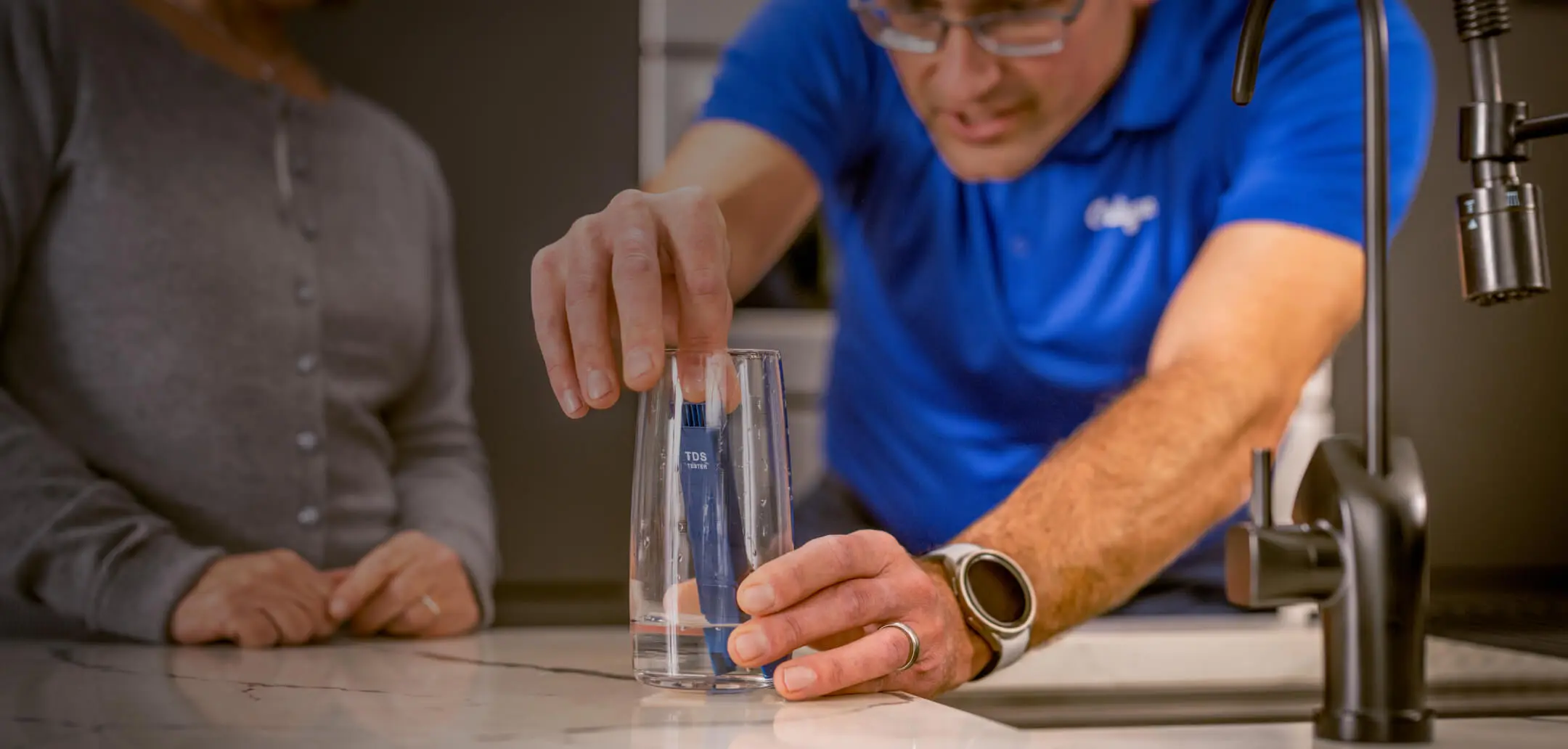
In the modern world of environmental health, we are often bombarded with information about a vast array of potential contaminants in our daily lives, from microplastics in our food to air quality indexes in our cities. Yet, when it comes to the water that flows from our kitchen taps, one specific element remains the focal point of serious, rigorous water analysis: lead. Despite decades of regulation, infrastructure updates, and widespread public awareness, lead testing remains the gold standard—and the most critical component—of any comprehensive water safety assessment.
For residents in dense, historic urban environments, this is not a theoretical concern. It is a practical, everyday reality. Understanding why lead remains at the center of this conversation, and why professional verification is essential, is key to taking control of your home’s environmental health.
The Enduring Threat of Lead in Plumbing
The reason lead continues to dominate water analysis discussions is simple: it is a legacy contaminant. Unlike other water quality issues that may stem from temporary environmental events or industrial runoff, lead in residential water is almost entirely a product of the plumbing infrastructure itself. Even in a city like New York, where the municipal water supply is famously high-quality as it leaves the treatment facility, the “last mile”—the journey from the city main, through the building service line, and into your specific tap—is where the risk is introduced.
In Manhattan, we live among some of the oldest residential infrastructure in the country. Many buildings were constructed at a time when lead service lines were not just permitted; they were the industry standard. Furthermore, until 1986, lead-based solder was commonly used to join copper pipes. While these practices are long banned, the materials remain in place, often tucked away inside walls, beneath basement floors, or buried underground.
Lead does not simply disappear. It persists, and it leaches. When water sits stagnant in these older pipes—especially overnight or during periods of low usage—it begins to interact with the plumbing material. If the water chemistry is even slightly corrosive, lead ions can release into the water supply. Because there is no “safe” level of lead exposure, particularly for children and pregnant individuals, as established by the U.S. Environmental Protection Agency (EPA), it remains the primary target of any serious diagnostic test.
Why Professional Analysis Goes Deeper
When homeowners or property managers begin to worry about their water, the first impulse is often to buy an over-the-counter DIY test kit. These kits can provide a basic “yes or no” regarding the presence of certain contaminants, but they often lack the sensitivity required to truly assess a lead risk.
Serious water analysis is fundamentally different from a simple screening. When you engage professional testing services, you are accessing laboratory-grade equipment, such as Inductively Coupled Plasma Mass Spectrometry (ICP-MS), which can detect metals at the parts-per-billion level. This is the difference between knowing if there is “some” lead and knowing if the levels exceed regulatory safety thresholds.
Furthermore, professional testing accounts for the dynamics of the building itself. An expert knows that lead levels can fluctuate based on how the water is sampled. They will use specific protocols, such as “first-draw” sampling (water that has been sitting in your pipes for at least six hours), to identify the worst-case scenario. This helps differentiate whether the lead source is local to your specific fixture or if it is coming from the building’s main riser. This level of granular data is vital for making decisions, such as whether a simple faucet aerator replacement is enough, or if a more comprehensive point-of-use filtration system is required.
The Manhattan Context: Density and Infrastructure
The landscape of Manhattan buildings adds another layer of complexity. We are not dealing with a monolithic housing stock; we have everything from brownstones in the West Village to massive high-rise cooperatives on the Upper East Side. Each building has a unique “water profile” dictated by its age, the material of its pipes, and how frequently its residents use water.
In large apartment buildings, there are massive rooftop water tanks, recirculation loops, and intricate piping systems that can harbor sediment. Over time, these systems can become reservoirs for lead-containing particles. If you are a resident, or even a co-op board member trying to manage these water issues, you cannot rely on a single, one-off test from one apartment to represent the entire building. You need a systematic approach that looks at the health of the entire plumbing network.
This is why local, professional expertise is so valuable. Technicians who work specifically within the city know the common pitfalls of NYC plumbing. They understand that a renovation in the unit below yours can vibrate your pipes, shaking loose sediment that has been dormant for decades. They understand the impact of seasonal changes in water temperature and chemistry. This contextual knowledge turns a simple laboratory report into a roadmap for building safety.
Taking Action: What Your Results Mean
If you have decided to move forward with a professional test, you are already ahead of the curve. But what happens once you receive the results?
If the results are clean, you have achieved the most important outcome: peace of mind. You have verified that the water coming out of your tap is safe for drinking, cooking, and bathing. You can stop worrying about the age of your pipes or the potential for invisible contamination.
If the results show elevated levels of lead, it is not a cause for panic—it is a cause for action. Unlike many other environmental hazards that are difficult to remediate, lead in water is highly manageable. The report from your water testing company will provide the data needed to implement a solution. This could be as simple as changing a specific fixture, implementing a flushing protocol for your morning water usage, or installing a certified NSF/ANSI filtration system.
The New York City Department of Health has extensive resources on why lead prevention is so important, particularly for families. Having your own test data allows you to have a productive, fact-based conversation with your building management or landlord. Instead of complaining about “bad water,” you can present a report that identifies a specific safety concern, which is far more likely to prompt a professional response from building maintenance.
Integrating Water Health into Home Maintenance
We often think of home maintenance in terms of the visible: painting walls, fixing leaks, or upgrading appliances. However, we must start viewing water quality as a core component of “hidden” maintenance. Just as you would check your smoke detectors or clean your HVAC filters, testing your water should be a periodic, proactive habit.
This is particularly true if you are planning any kind of renovation or if you have just moved into a new home. Any change in the plumbing system—even just swapping out a sink—can temporarily increase the risk of lead leaching. A test conducted after the work is done serves as a final “clearance” to ensure that the disruption didn’t cause a long-term water quality problem.
If you are unsure whether you need a test, or if you simply want to learn more about the common myths surrounding tap water safety, our FAQ page is a great place to start. For those who want to dive deeper into how Manhattan’s unique geography affects our utilities, our blog provides regular updates on local water health topics.
Final Thoughts on Household Safety
Lead testing sits at the center of serious water analysis because it addresses the most persistent, most dangerous, and most common water quality risk in urban residential buildings. By prioritizing this test, you are choosing to move away from guesswork and toward objective, actionable knowledge.
Don’t wait for a public announcement or a change in the color of your water to take an interest in what is coming out of your pipes. The water you drink every day should be a source of hydration and health, not a source of lingering anxiety. Whether you are living in a historic loft or a modern high-rise, taking that first step—contacting local experts to perform a professional assessment—is the single most effective way to protect your family’s long-term health.
Your home is your sanctuary, and the foundation of that sanctuary is the health of the resources you use every single day. Make water testing a non-negotiable part of your home’s safety plan. It is a small effort that yields a massive return in peace of mind and physical well-being.