New York City’s municipal water supply is widely considered to be among the highest quality in the United States. Sourced from protected upstate reservoirs and treated with rigorous standards, the water that leaves the city’s filtration facilities is pristine. However, for residents living in the dense, historic landscape of Manhattan, the journey of that water from the city main to your kitchen tap is not always straightforward. Once the water enters the private infrastructure of a residential building, it encounters a complex web of aging pipes, varying maintenance histories, and diverse plumbing materials that can fundamentally alter the quality of what you drink, cook with, and bathe in.
In recent years, a growing number of New Yorkers have realized that relying solely on city-wide water quality reports is not enough. This realization has sparked a shift in how we approach home health, with many residents and property managers now viewing professional water testing as an essential, rather than optional, component of living in Manhattan.
The Hidden Journey of Your Tap Water
To understand why water quality can fluctuate so significantly from one address to the next, we must look at the “last mile” of the water delivery system. While the city maintains the main lines—the large conduits beneath our streets—the service lines that branch off into individual buildings, and the internal plumbing systems within those buildings, are the responsibility of property owners.
Many Manhattan residential buildings, particularly those in historic neighborhoods like the Upper West Side, Greenwich Village, and the Lower East Side, were constructed long before modern building codes were established. In these older structures, the internal plumbing might be decades, or even a century, old. Even in buildings that have undergone renovations, the integration of new fixtures with old piping can create chemical and physical interactions that were never anticipated.
This is where the distinction between “city-wide water” and “your tap water” becomes critical. While the city ensures the water is safe upon delivery, your building’s specific water issues are determined by what happens inside the walls.
Why Aging Infrastructure Increases Risk
The primary concern in many of these older properties is the composition of the plumbing. For most of the 20th century, lead was a common material for service lines, and lead-based solder was frequently used to join copper pipes. Although these practices have been banned for decades—the federal ban on lead pipes came in 1986—the legacy of these materials persists.
Lead does not decay, but it does corrode. Over time, the protective mineral coatings inside older pipes can break down, especially when there are changes in water chemistry, construction vibration, or simply the natural wear and tear of time. When this happens, lead can leach into the water, particularly if it has been sitting stagnant in the pipes overnight.
Copper, while generally safer than lead, is also a concern when plumbing is improperly maintained or when the water chemistry is aggressive. Excessive copper levels can cause a metallic taste in the water and, over time, can contribute to health issues if consumption remains high. Beyond metals, there is the risk of microbial contamination. In large residential high-rises, water storage tanks, complex recirculation systems, and under-used taps can create environments where bacteria or sediment buildup can occur.
Moving Beyond the DIY Approach
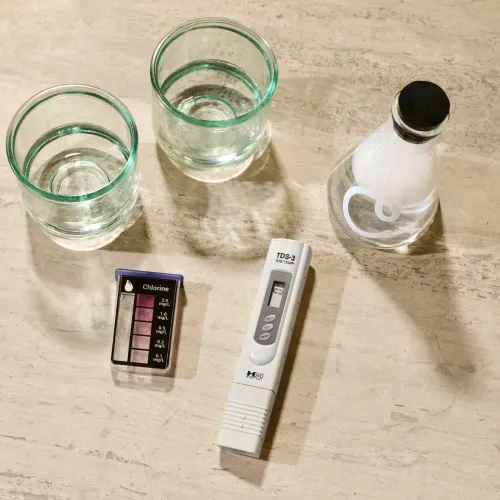
When residents first notice something off—a slightly metallic taste, a faint odor, or perhaps discolored water—the first instinct is often to pick up a consumer-grade, DIY water testing kit from a local hardware store. While these kits can provide a quick “yes or no” regarding basic parameters like pH or hardness, they are rarely sufficient for identifying the complex contaminants that are most relevant to Manhattan residents.
Professional water testing is a different class of analysis. When you work with testing services that utilize certified, independent laboratories, you are getting more than just a surface-level scan. Professional tests typically employ advanced techniques like Inductively Coupled Plasma Mass Spectrometry (ICP-MS), which can detect trace levels of heavy metals—including lead, copper, and arsenic—with precision that DIY strips simply cannot match.
Furthermore, professional testing accounts for the specific nuances of your building’s environment. An expert knows exactly how to collect samples to capture the water that has been sitting in your pipes (first-draw samples) versus water that has been flushed, allowing them to isolate whether the issue lies in your apartment’s specific fixtures or the building’s main riser.
The Role of Regulation and Building Compliance
It is helpful to understand the regulatory context in which we operate. The federal Lead and Copper Rule, overseen by the Environmental Protection Agency (EPA), sets the standards for how much lead and copper are acceptable in public drinking water systems. However, these regulations focus largely on the public water supplier’s obligations.
When it comes to individual residential buildings—especially in a city as large and complex as New York—the burden of proactive safety often falls on the residents and landlords. Buildings are not always required to test individual apartments on a frequent, ongoing basis. This creates a “safety gap” where tenants might be exposed to contaminants simply because no one has checked the specific line serving their kitchen or bathroom recently.
By conducting your own professional assessment, you aren’t just reacting to a potential problem; you are establishing a baseline for your family’s health. If you are a parent, a pet owner, or a resident with health sensitivities, this data provides the clarity needed to make informed decisions about whether you need to install a point-of-use filtration system or request that your building management investigate a potential leak.
Who Benefits Most from Professional Testing?
While every resident can benefit from knowing the quality of their water, there are specific groups for whom testing is particularly critical:
- Families with Young Children: Children are uniquely vulnerable to lead exposure. Because their bodies are still developing, even low levels of lead can have long-lasting effects on cognitive development. If you live in an older building, testing is a fundamental health precaution.
- Renovators and New Residents: If you are moving into a new apartment or have recently completed a renovation, testing is essential. Construction work on plumbing systems can shake loose sediment and lead particles that have been dormant for years. Testing ensures that the “new” environment you are moving into is actually clean.
- Property Managers and Co-op Boards: For those responsible for Manhattan buildings, proactive testing is a risk management strategy. It demonstrates a commitment to tenant safety, maintains property value, and allows for the early identification of maintenance needs before they become expensive, building-wide emergencies.
Taking the First Step: How It Works
The process of professional water testing is intentionally designed to be non-intrusive and straightforward. It begins with a consultation to understand your specific concerns. Are you noticing a change in taste? Are you worried about the age of your plumbing? Do you want a general safety screening?
Once the scope is defined, a technician collects samples from your taps. These samples are carefully preserved and transported to a laboratory. The analysis typically covers a comprehensive suite of contaminants, ensuring you get a complete picture of your water’s chemical and biological health. You receive a detailed report that breaks down the findings in layman’s terms, often with clear explanations of what the results mean for your household.
If the results are clean, you gain peace of mind—the intangible but invaluable benefit of knowing your home is safe. If, on the other hand, the test reveals an issue, you gain actionable knowledge. You aren’t guessing anymore. You know exactly what the contaminant is and at what levels it exists, allowing you and your plumber or building management to implement the right solution, whether that is replacing a faucet, installing a filter, or cleaning out an aerator.
Empowerment Through Knowledge
In a city as dynamic as New York, we often feel like we have very little control over our environment. We share air, we share walls, and we share water lines. But by taking the initiative to understand the quality of the water in your own apartment, you reclaim a significant degree of control.
Water quality is the foundation of household health. It affects everything from the food we cook to the water we drink daily. Ignoring the potential for contamination in older Manhattan residential buildings is a gamble that no longer needs to be taken. With accessible, professional testing services, you can ensure that the water in your glass is as clean and safe as it was when it left the mountain reservoir.
If you have questions about your building’s plumbing or are ready to schedule a test, contacting local experts is the first step toward safeguarding your health. Don’t wait for a noticeable change in color or taste to take action; ensure the safety of your home today. For more information, you can always visit our FAQ page to learn more about our testing methodologies or browse our blog for deeper dives into common water quality myths.
Protecting your water is a small investment that pays massive dividends in your family’s long-term health and well-being. Whether you are living in a historic pre-war apartment or a modern high-rise, professional testing is the standard for the modern, informed New Yorker. Take the guesswork out of your tap water and enjoy your home with absolute confidence.