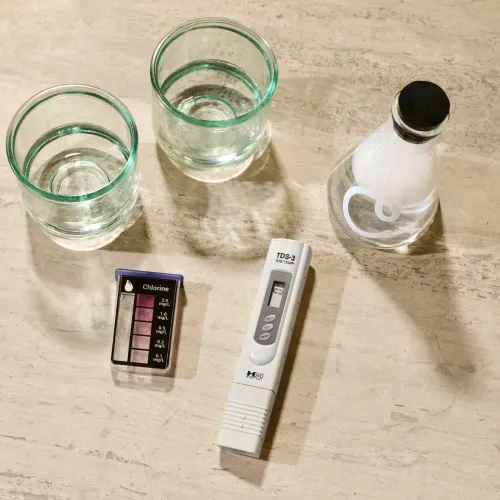
Water testing laboratories Manhattan are essential in a high-rise office tower or sprawling Manhattan commercial complex, where “the water” is not a single, uniform entity, since the sheer scale and complexity of commercial plumbing means water quality at a lobby drinking fountain can be fundamentally different from the water in a 40th-floor executive breakroom or a basement mechanical cooling loop; to address this variability, trained technicians collect samples from several strategic locations throughout a property rather than relying on one generalized reading, and certified analysts then examine each sample for lead, copper, bacteria, and chemical indicators, comparing results across floors and systems to reveal exactly where problems originate, a fixture-by-fixture method that allows building managers to catch localized issues, such as stagnation in underused breakroom lines or scaling within mechanical loops, before they escalate into costly repairs or compliance violations, all while protecting tenants, equipment, and long-term asset value.
For property managers and facilities directors, a single water sample is a statistical snapshot that rarely tells the whole story. To achieve true operational intelligence and mitigate risk, multi-point sampling is the only way to uncover the truth about a building’s hidden infrastructure.
The Myth of the “Representative” Single Sample
In a residential apartment, one or two samples can often provide a clear picture of the plumbing health. In a commercial property, however, a single sample is frequently a “false comfort.”
- Vertical Variability: Manhattan’s commercial towers rely on booster pumps and intermediate storage tanks to move water upward. Each tank and pump station introduces a new variable where sediment can settle or bacteria can colonize.
- Horizontal Branching: A single floor can have hundreds of feet of lateral piping. Water at the “end of the line”—furthest from the vertical riser—often has a higher “water age,” leading to lower chlorine residuals and higher bacterial counts.
- The “Usage Gap”: In commercial buildings, some wings may be densely populated while others remain vacant for months. A sample taken from a high-traffic area will not reflect the stagnation risks (like Legionella or heavy metal leaching) occurring in an underutilized wing.
Mapping the “Zones of Risk”
Professional testing services use multi-point sampling to create a “heat map” of a building’s water quality. This approach allows managers to identify specific zones of risk:
| Sampling Point | What It Reveals |
| Point of Entry (POE) | The quality of the “imported” water from the NYC water mains. |
| Storage Tank Outlets | Whether the building’s internal storage is introducing sediment or biological growth. |
| Distal Outlets (End of Run) | The “worst-case scenario” for stagnation and disinfectant decay. |
| Mechanical Loops | The chemical balance (pH, Hardness) that protects multi-million dollar HVAC assets. |
By comparing these points, Manhattan water testing can determine if a water issue is a city-wide problem, a building-wide problem, or a localized fixture problem.
The “Dilution Delusion” in Large Systems
A common mistake in weak sampling work is taking a “composite” sample or relying on a single high-flow outlet. Because commercial systems move such high volumes of water, localized contamination (like a corroding valve or a specific “dead leg” with high lead) can be temporarily diluted by the time it reaches a main drain.
Only by testing specific, targeted outlets can you find the “needle in the haystack.” If a manager only tests the lobby, they might miss a lead spike on the 12th floor caused by an old brass fitting that was never replaced during a 1990s renovation.
Liability and the “Standard of Care”
In the event of a health inquiry or a tenant dispute, a single sample provides a very thin shield of defense. Multi-point sampling, however, establishes a documented standard of care. It proves that the management was not just “checking a box” but was actively monitoring the entire vertical ecosystem of the building.
For Class-A commercial properties in Manhattan, this data is an essential part of the building’s “Environmental, Social, and Governance” (ESG) profile. It provides the transparency that high-profile corporate tenants now demand. Many managers find that reviewing a professional FAQ helps them explain the necessity of this expanded scope to ownership boards.
Conclusion
In a commercial building, the truth is found in the differences between samples. One sample might tell you the water is safe; ten samples will tell you where the system is failing, why the pipes are corroding, and how to protect your tenants and your equipment.
If you are managing a commercial asset and are still relying on a single “representative” sample, you are managing with a blind spot. Contact our team today to design a multi-point sampling plan that provides the full picture of your building’s health. For more insights on the science of large-scale plumbing, visit our blog for the latest updates.