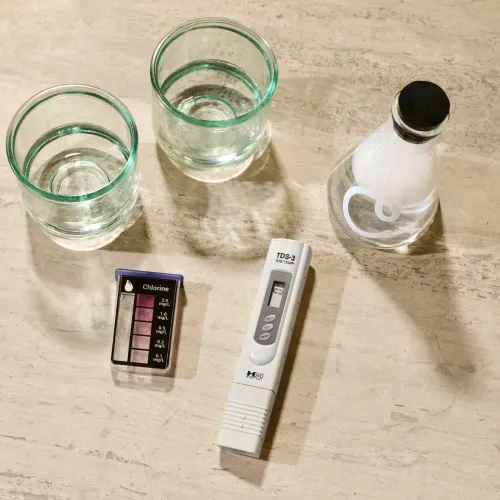
On a standard Manhattan water testing report, copper is often overshadowed by the high-profile risks of lead. However, copper findings are far from a “secondary” concern—and water testing laboratories are equipped to prove it. Because copper is the primary material for modern domestic plumbing, its concentration in your water serves as a highly sensitive indicator of your building’s internal environment. A copper finding isn’t just about the metal itself; it is a chemical readout of how your water is interacting with your infrastructure. When read correctly, copper data provides critical insights into plumbing age, stagnation patterns, and the effectiveness of your building’s corrosion control—transforming raw numbers into actionable recommendations that safeguard both your building and its occupants.
The “New Pipe” Paradox: Why High Copper Isn’t Always Bad
One of the most surprising insights from testing services is that high copper levels are often found in the newest, most expensive Manhattan buildings.
Copper pipes survive for decades because they develop a “passivating film”—a stable, protective mineral layer (often malachite or cuprite) that forms on the interior wall.
- The Aging Effect: Brand-new copper pipes have not yet developed this “patina.” As a result, the water is in direct contact with bare metal, leading to higher leaching rates in the first 1 to 3 years of a building’s life.
- The Diagnostic Clue: If a 50-year-old building suddenly shows a spike in copper, it is a signal that the protective patina has been stripped away, likely due to a change in water chemistry (pH drop) or high-velocity “scouring” during a pump upgrade.
Copper as a Tracer for Stagnation
Because copper leaches relatively predictably, it is the perfect “tracer” to determine if a unit’s water has been sitting still.
- First Draw vs. Flush: If a “First Draw” sample (water that sat overnight) shows 1.2 mg/L of copper, but a 30-second flushed sample shows 0.1 mg/L, the “source” is clearly the unit’s own plumbing.
- The Operational Insight: For property managers in areas like Central Park South, where units may sit empty for months, copper levels provide the data needed to justify and design a mandatory flushing program for unoccupied suites.
Identifying Microbiologically Influenced Corrosion (MIC)
A persistent water issue in Manhattan is the “blue water phenomenon.” When copper levels exceed the EPA Action Level of 1.3 mg/L, the water may take on a distinct blue-green tint and leave similar stains on white porcelain sinks.
While often caused by low pH, extreme copper spikes can also be a sign of Microbiologically Influenced Corrosion (MIC). Certain bacteria (like Pseudomonas) can form biofilms that actively “eat” copper, creating localized pits and pinhole leaks. If your copper levels are high despite a neutral pH, a biological audit is the next logical step.
Health Implications for Sensitive Populations
While copper is an essential nutrient, the body can only process so much. For most New Yorkers, elevated copper causes temporary gastrointestinal distress (nausea, cramping). However, for specific groups, the stakes are higher:
- Infants: Babies under one year old have developing livers that cannot excrete excess copper as efficiently as adults.
- Wilson’s Disease: Individuals with this rare genetic disorder must be extremely vigilant, as their bodies naturally accumulate copper to toxic levels.
A certified report provides the “Standard of Care” documentation needed to protect these vulnerable residents. Many families consult a professional FAQ to understand how to interpret these results and when to consider point-of-use filtration.
Conclusion
Copper is the “silent reporter” of your plumbing system. It tells you if your pipes are new or old, if your water is stagnant or flowing, and if your building’s chemistry is protective or aggressive. By moving beyond a simple “pass/fail” mindset, Manhattan owners can use copper findings to gain a deeper understanding of their building’s hidden health.
If you are seeing blue-green staining in your fixtures or have received a report with elevated copper, contact our team today for a diagnostic interpretation. For more technical insights into the chemistry of NYC tap water, visit our blog for the latest updates.